Countertop Company Marketing Plan Example
Unlock More Leads and Sales for Your Countertop Business: Follow Our Proven Marketing Blueprint.
Use this example to assess your current marketing or get started on a strategy that drives real results.
Marketing a countertop company requires a combination of strong branding, visibility, trust-building, and a seamless customer journey, from initial inspiration to final installation. This example marketing plan outlines all the core parts needed for a successful strategy, using a company like FLOFORM Countertops as an illustrative reference.
Use this as a template to build your own plan or as a guide to evaluate where your current marketing could be improved.
- Executive Summary
- Market & Competitive Analysis
- Brand Positioning & Value Proposition
- Marketing Channels
- Marketing Tactics & Partnerships
- Sales & Customer Journey
- Content & Brand Marketing Strategy
- Budget & Resource Planning
- KPIs & Performance Tracking
- Risk & Competition Analysis
- Example 12-Month Marketing Timeline
For expert guidance and a customized marketing plan tailored to your countertop business, reach out to Profitworks today and let our team help you grow your leads and sales.
1. Executive Summary
Your countertop company marketing plan starts with a clear overview of:
- Your company’s history and reputation
- Target markets (homeowners, contractors, designers, etc.)
- Core offerings (quartz, granite, porcelain, laminate, wood, etc.)
- Competitive strengths (fabrication expertise, multiple locations, custom work, fast installation, design guidance)
This section gives leaders and marketers a shared understanding of what your company is and the direction it’s aiming for.
Start your marketing plan with clarity: every great strategy begins with a solid foundation.
2. Market & Competitive Analysis
Understanding the market ensures your strategy matches customer needs.
Customer Segments
- Homeowners renovating kitchens or bathrooms
- Contractors / Builders needing reliable supply and installation
- Interior Designers seeking premium materials
- Commercial clients (restaurants, offices, hotels)
Customer Pain Points
- Confusion about material differences
- Desire for durable, attractive surfaces
- Need for honest pricing
- Clear timelines
- Reliable installation
- Design help
Competitive Landscape
Analyze:
- Other countertop fabricators
- Big-box stores (Home Depot, Lowe’s)
- Custom stone shops
- DIY alternatives
- Online design-first competitors
Identify gaps — e.g., faster installation, better design support, exclusive colours, or more convenient appointment options.
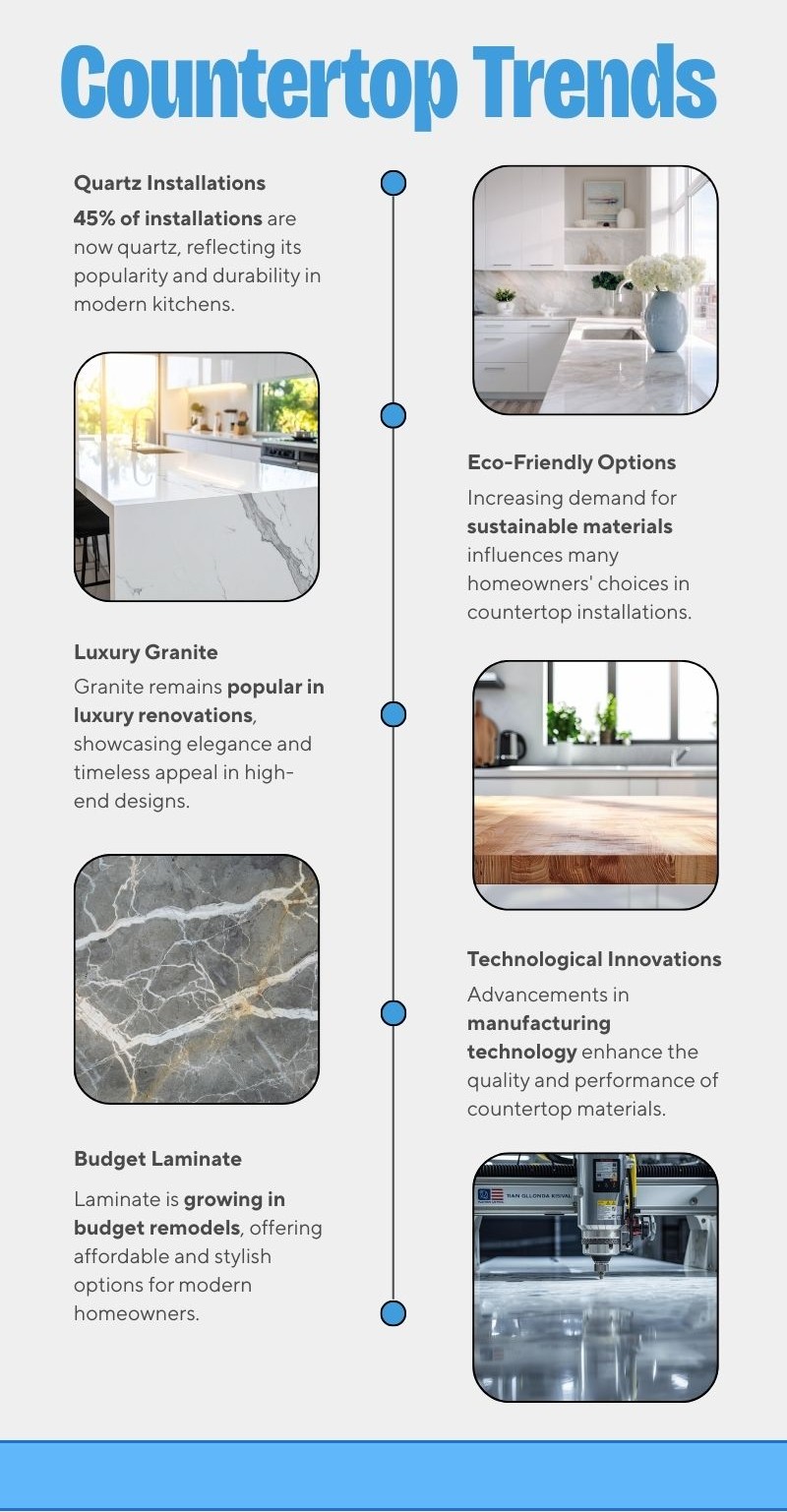
Market Trends
- Quartz and porcelain popularity rising
- Premium kitchen upgrades increasing
- Strong demand for visual, inspirational content
- Local Google searches becoming the primary lead source
- Growing interest in low-maintenance, durable surfaces
3. Brand Positioning & Value Proposition
Define what makes your countertop company the preferred choice.
Brand Pillars
- Quality craftsmanship
- Expert guidance from design to installation
- Wide selection of materials
- Fast, reliable service
- Exceptional warranties
- Local trust and reputation
Key Messages
- “One-stop countertop solution from design to installation.”
- “Premium materials and expert installers you can trust.”
- “Beautiful surfaces. Stress-free experience.”
Unique Selling Propositions
Examples for a FLOFORM-style company:
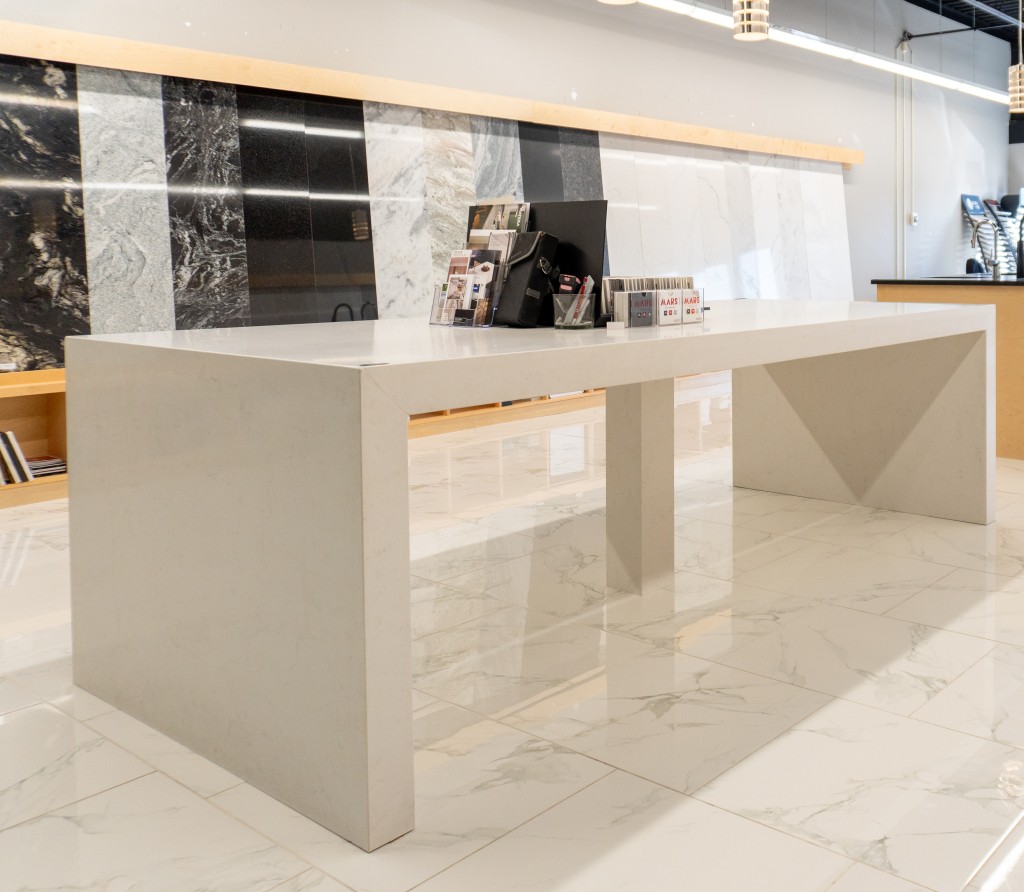
- Multiple showrooms
- In-home, virtual, or showroom consultations
- Exclusive colours and curated design collections
- Decades of industry expertise
4. Marketing Channels
Strong visibility is the foundation of countertop marketing — helping homeowners find you, trust you, and view your past work.
Website & SEO
Your website should clearly present your materials, services, process, gallery, and showroom information, with fast, mobile-friendly performance. SEO should focus on local countertop keywords such as “countertops near me,” “quartz countertops [city],” and “[city] countertop installation.”
Content Marketing
Create helpful, search-friendly content like Quartz vs Granite comparisons, maintenance tips, kitchen design trends, installation walkthroughs, project case studies, and renovation guides to build authority and attract organic traffic.
Social Media
Use visual platforms such as Instagram, Pinterest, TikTok, and YouTube to showcase transformations, style ideas, installation clips, and customer stories — helping homeowners visualize their own renovation.
Local SEO
Improve local visibility by optimizing your Google Business Profile, maintaining consistent directory listings, generating reviews, and creating service-area landing pages to boost map rankings and nearby calls.
Boost your visibility and attract more homeowners by combining a strong website, helpful content, social media, and local SEO.
5. Marketing Tactics & Partnerships
Once your visibility channels are in place, targeted tactics and strategic partnerships help generate leads, build relationships, and maintain a steady flow of business.
Paid Advertising
Use paid ads to quickly reach homeowners and drive inquiries. Focus on:
- Google Ads for local searches like “countertop installation near me”
- Meta Ads (Facebook & Instagram) targeting homeowners and renovation enthusiasts
- Local display or retargeting ads
- Showroom and event promotions
Referral Partnerships
Partner with complementary businesses to gain high-quality leads:
- Renovation contractors
- Interior designers
- Kitchen cabinet companies
- Home builders
- Real estate agents
Provide partners with brochures, samples, design kits, or referral incentives to keep your business top of mind.
Generate consistent leads and grow your business by leveraging paid advertising and strategic referral partnerships.
6. Sales & Customer Journey
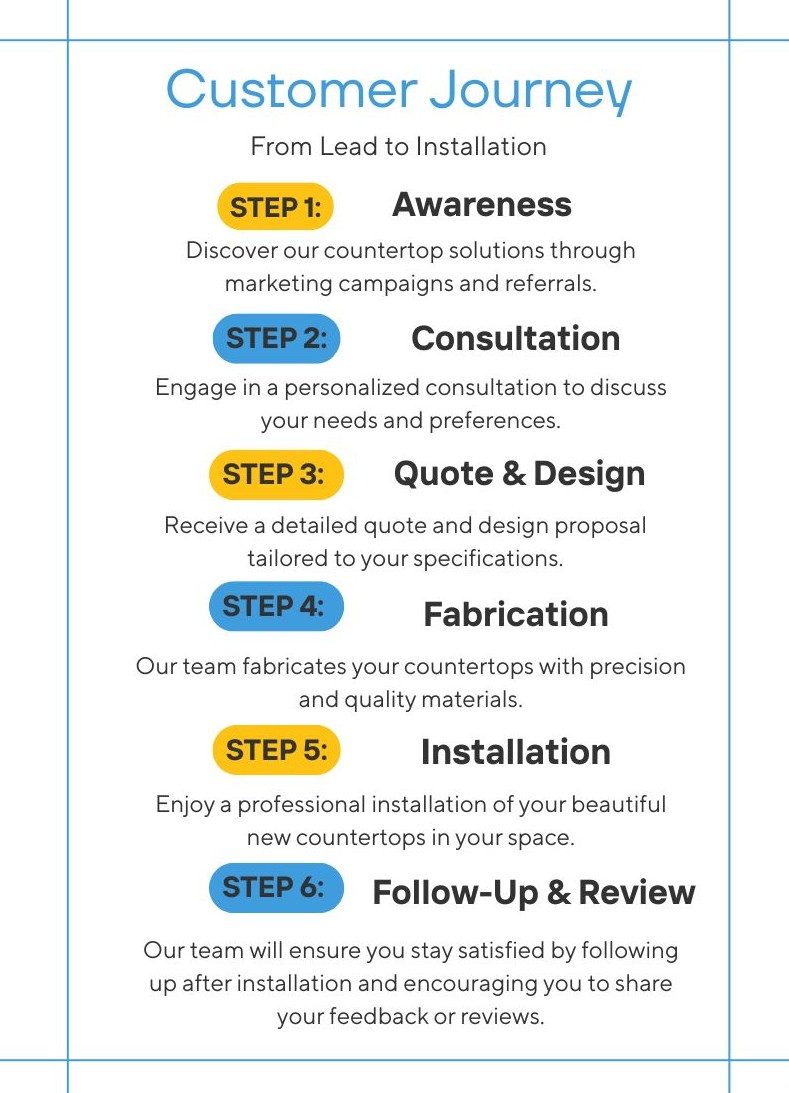
Map each step from awareness to installation:
Step 1: Online search or social discovery
Step 2: Website visit → quote request
Step 3: Consultation (showroom, in-home, or virtual)
Step 4: Material selection
Step 5: Measurement / templating appointment
Step 6: Fabrication
Step 7: Installation
Step 8: Aftercare instructions / warranty
Step 9: Review & referral request
This section should also highlight:
- Fast response times
- Professional communication
- Clear expectations and timelines
- Post-install support
7. Content & Brand Marketing Strategy
Types of Content to Publish Regularly:
- Educational blog posts
- FAQ videos
- Project galleries
- Customer testimonial videos
- Case studies showcasing unique projects
- Trend articles (e.g., “Top Countertop Colours for 2025”)
- Behind-the-scenes fabrication videos
Visual Assets Needed:
- High-resolution project photos
- Short-form video
- Mood boards
- Style collections (modern, classic, luxury, family-friendly)
Brand Storytelling Ideas:
- “Made locally” or “craftsmanship-first” messaging
- Show your team — installers, fabricators, designers
- Celebrate long-term employees
- Document real customer transformations
8. Budget & Resource Planning
Establish:
- Monthly marketing spend
- Cost of content creation
- Ad spend (if applicable)
- Website / SEO services
- Graphic design & video production
- Print materials and showroom assets
- Event or home-show participation
Also determine:
- What’s done internally
- What’s outsourced
- Tools needed (CRM, scheduling, analytics, etc.)
Plan your marketing budget wisely — allocate resources to the tactics that deliver the best return and keep your team focused on what drives results.
9. KPIs & Performance Tracking
Track indicators like:
- Website traffic (organic, paid, referral)
- Conversion rate (visits → quotes)
- Cost per lead
- Cost per acquisition
- Total leads per month
- Average project value
- Customer satisfaction
- Review velocity (Google reviews added monthly)
- Social engagement & follower growth
Review monthly and adjust based on results.
10. Risk & Competition Analysis
Common risks for countertop companies include:
- Economic slowdown reducing homeowner spending
- Big-box retailers offering cheaper pricing
- Installation delays harming reputation
- Trend changes requiring fast adaptation
- Limited fabrication capacity
- Trades labour shortages
Mitigation strategies:
- Maintain strong brand differentiation
- Offer flexible consultation options
- Promote quality, warranties, custom work
- Invest in review management
- Improve internal communication & scheduling systems
Countertop challenges? Combat competition, labour gaps, and trend shifts with expert service and smart planning.
11. Example 12-Month Marketing Timeline
Months 1–3
- Rebuild or optimize website
- Launch SEO improvements
- Publish 4–6 core blog posts
- Set up Google Business Profile & directory listings
- Gather project photo assets
- Begin regular posting on Instagram & Pinterest
Months 4–6
- Expand blog content
- Launch paid search ads (optional)
- Create customer testimonial section
- Start partnerships with designers/contractors
- Add new galleries & case studies
Months 7–12
- Publish advanced guides & trend pieces
- Create short-form video content consistently
- Host a showroom event or attend a home show
- Run remarketing ads
- Review KPIs & adjust plan
- Push review-generation campaigns
Take Your Countertop Marketing to the Next Level
This “Countertop Company Marketing Plan Example” provides a full blueprint a business can follow — from brand positioning and SEO to content marketing, partnerships, customer journey optimization, and performance measurement.
Countertop companies that follow a structured plan like this dramatically improve their lead flow, increase sales, and stand out in a competitive renovation market.
Ready to take your marketing to the next level? Contact Profitworks today to get professional guidance and a customized plan that drives results.